Most service businesses don’t struggle because they lack leads.
They struggle because leads arrive without ownership.
When someone fills out a form or sends a message, something important happens: intent appears. But without a system to capture and route that intent, it remains invisible.
This is the moment where revenue intent either becomes visible — or disappears quietly.
Intake Is the Boundary, Not the Trigger
Most automation workflows treat intake as a technical trigger.
But intake is more than that. It’s a boundary.
It defines what the system agrees to accept as a lead, how that lead is identified, and what must happen next. If this boundary is vague, everything downstream becomes fragile.
Clean intake isn’t about collecting more data. It’s about establishing identity and intent in a consistent way.
Why Normalization Matters
Leads rarely arrive from one place.
They come from chat widgets, contact forms, emails, and referrals. Each source labels information differently and carries different context.
Without normalization, the system can’t reason about what just happened. It sees fragments instead of events.
Normalization gives the system a shared language. That’s what allows multiple sources to behave like one pipeline.
Identity Is the Anchor
Before a system can route or act, it needs to answer a simple question: who is this?
Email often becomes the identity anchor — not because it’s perfect, but because it’s stable. It prevents duplication and preserves history across touchpoints.
Without a stable identity, context fractures and ownership becomes unclear.
A Deal Is a Commitment, Not Admin Work
In many CRMs, deals are created late — or manually — or not at all.
That’s why pipelines lie.
A deal isn’t a record-keeping step. It’s a commitment. Creating a deal means the system is acknowledging revenue intent.
If intent exists without a deal, revenue is invisible — even if the contact exists.
Why Deals Should Be Created at Intake
The moment intent appears, a deal should exist.
This removes hesitation, judgment calls, and memory from the process. Revenue tracking starts when intent appears — not when someone remembers to log it.
When deals are created automatically at intake, ownership becomes explicit and behavior changes.
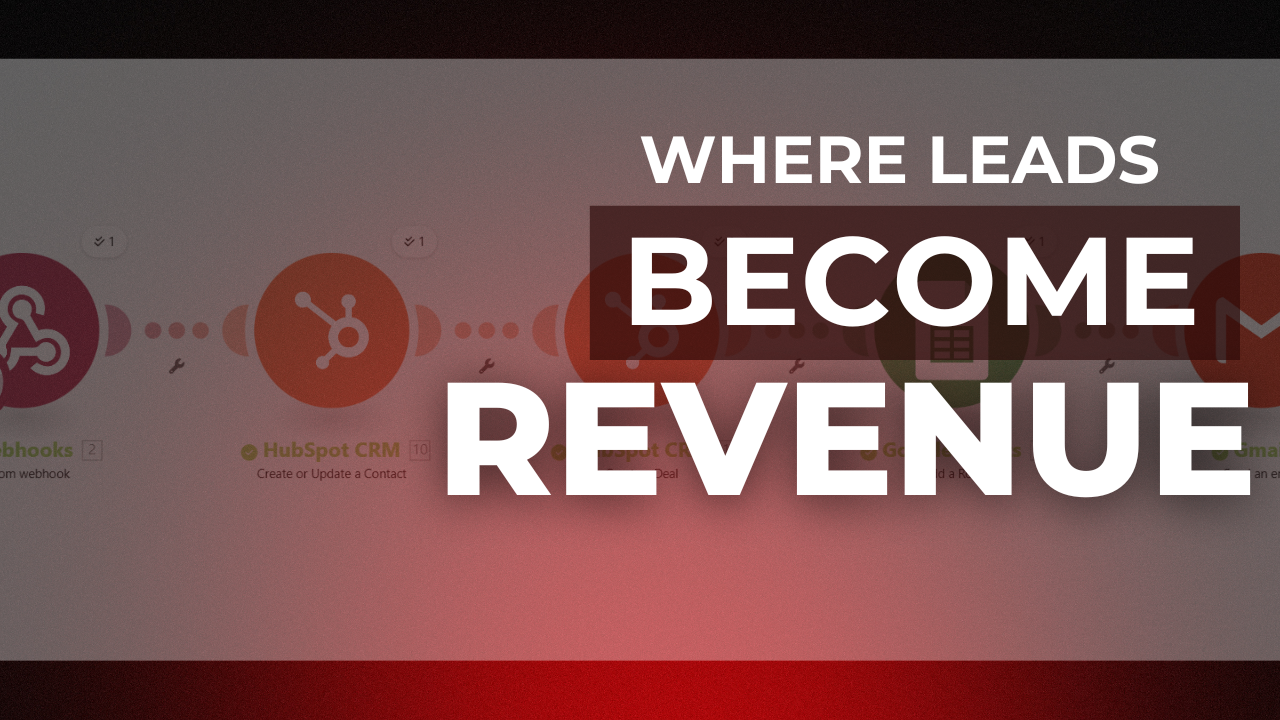
This Is Where Leads Become Revenue
This moment — when intake is normalized, identity is anchored, and a deal is created — is where leads stop being messages and start becoming revenue.
Everything downstream becomes simpler because the system is no longer guessing. It knows what happened, who owns it, and what must come next.
This is why missed leads are a system problem, not a tool problem.
What Comes Next
I’m documenting a free Revenue Automation Starter Blueprint that breaks down how these systems work step by step — starting with intake, routing, and ownership.
If you want to follow along as the system takes shape, you can get early access here: