Most service businesses don’t miss leads because people are lazy, careless, or disengaged.
They miss leads because nothing owns the moment after someone reaches out.
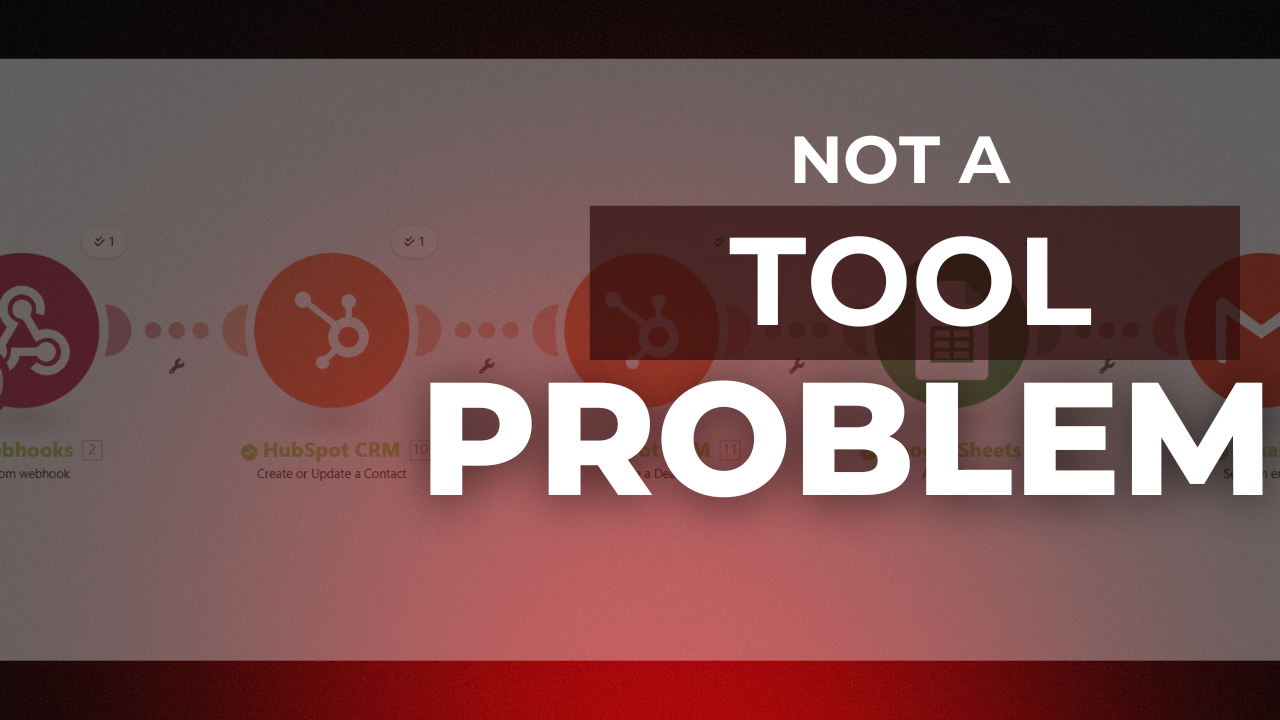
That distinction matters. When missed leads are treated as a tool problem, the solutions always look the same: a better CRM, a smarter chat widget, more automation, more dashboards. Those fixes rarely work for long.
This isn’t a tooling issue.
It’s a system issue.
The video below walks through why this keeps happening — and what changes when the system owns the moment.
A Lead Isn’t a Record. It’s a Moment.
When someone fills out a form, sends a chat message, or emails your business, they aren’t creating a task.
They’re creating a moment.
A short window where attention exists, intent is high, and momentum is fragile.
Most systems treat that moment like data. But moments aren’t data — they’re time-bound opportunities.
Systems don’t fail because data disappears. They fail because the moment passes.
Where Leads Actually Get Lost
Leads don’t usually vanish at the point of entry.
They get lost after they arrive.
They land in inboxes, chat tools, CRMs, and task lists. Each tool captures something, but no system owns the transition between them.
That’s where leads quietly leak.
Why “I’ll Get Back to This” Fails at Scale
Most missed responses aren’t intentional.
People fully plan to respond later.
But “later” has no owner.
Deferred attention has no deadline, no enforcement, and no visibility.
Once attention is deferred, it becomes invisible work.
Invisible work doesn’t get done consistently — not because people don’t care, but because nothing in the system is responsible for it.
Why Tools Don’t Fix This
When leads are missed, the instinct is to add tools.
A better CRM. A smarter chatbot. More automation.
But tools don’t create accountability — systems do.
Automation without structure just moves confusion faster. If the system doesn’t know what matters, it can’t protect it.
This is why people say “automation didn’t work,” when the real issue was that ownership was never enforced in the first place.
Follow-Up Is a Symptom, Not the Root Problem
Missed follow-up is what people notice.
But follow-up fails because ownership was never clear and timing was never protected.
Follow-up isn’t about politeness. It’s about momentum protection.
Without a system that owns the moment, follow-up depends on memory and effort — and those don’t scale.
Where This Fits in a Revenue Intake System
- Capture — how demand enters
- Qualification — what context exists
- Routing — where it lives
- Follow-Up — what happens if you don’t respond
- Conversion — how intent becomes revenue
When any of these layers are missing, leads leak. Most businesses try to fix the last layer when the real issue started at the first.
If you want to see how ownership becomes visible inside a real system, this walkthrough shows how leads move from intake into accountable revenue:
What Comes Next
I’m documenting a free Revenue Automation Starter Blueprint that breaks down how these systems work step by step — starting with how to stop losing leads the moment they arrive.
If you want to follow along as the system takes shape, you can get early access here: